








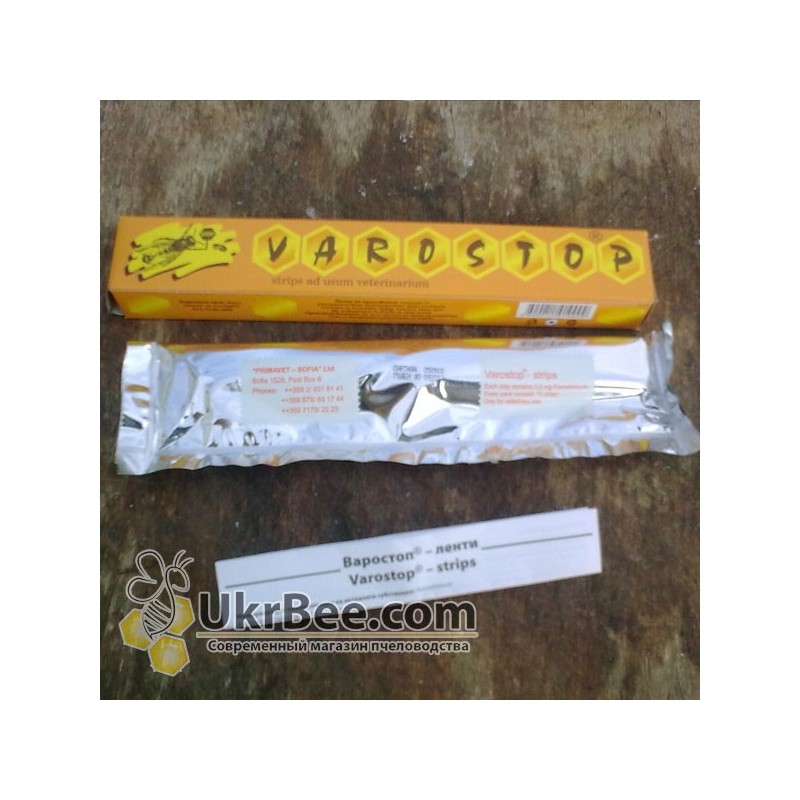
VAROSTOP, STRIPS WITH “Flumethrin, Flumethrinum” SUBSTANCE.
Varroa mite (varroatosis) is one of the most dangerous diseases in bees. With the use of poor preparations and a large number of bee colonies, many colonies die during the wintering period. Given the cost and financial costs of bees, there is no room for challenges and risks in modern beekeeping. The Bulgarian drug of the new generation “Varostop”, since its appearance on the Ukrainian market, has been striking in its effectiveness and ease of use in the fight against varroatosis. The active ingredient “Flumethrin” copes with the bees’ clinging at any stage.
Varostop kills up to 99.9% of all mites in the hive. The drug is a thin woody strips impregnated with the active substance flumethrin. Flumethrin is a synthetic pyrethroid with a contact acaricidal effect against Varroa destructor mites (formerly called Varroa jacobsoni) and which has no harmful effects on bees, queens, larvae.
INSTRUCTIONS FROM THE INSERT OF THE PREPARATION “VAROSTOP ®”
Varostop acts on the Varroa mite in bees with an efficiency of up to 99.9%
Composition: Each strip contains 3.6 mg of flumethrin (Flumethrinum). Each pack contains 10 strips.
Packaging form: each package contains a roll of 10 hermetically sealed tapes (strips).
Action: synthetic pyrethroid (flumethrin), which is part of the Varostop preparation, has a reliable contact insecticidal and acaricidal action against the causative agents of varroatosis – the Varroa jacobsoni mite. Differs in high acaricidal activity – up to 100%. It paralyzes the nervous system of ticks and significantly reduces their population. Flumethrin is extremely selective against Varroa jacobsoni mites and does not harm bee colonies. There is no evidence of acquired resistance of ticks to flumethrin.
Indications: Prevention and treatment of varroatosis in bees.
Contraindications: do not use during the honey period.
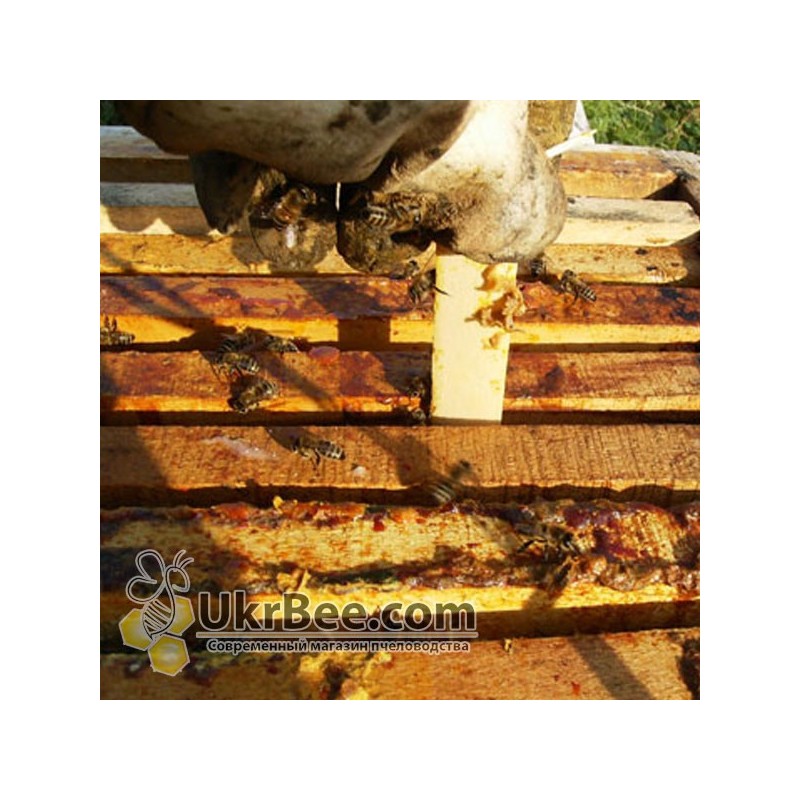
Method of application: depressurize the strips immediately before use. Fasten one tape through two frames. Treatment of bee colonies with Varostop is carried out: – in early spring – when larvae, prepupae and pupae occupy an insignificant space in a bee colony; – in summer – at the end of July – at the beginning of August, when queens lay eggs to a limited extent, the area with larvae, prepupae and pupae is insignificant, and the rest of the area is filled with honey, and most of the female mites are on bees. Processing is carried out directly after pumping out honey by a centrifuge from the main bee honey plant; – in autumn – in September, when the area with bee larvae, prepupae and pupae decreases significantly.
Dosage: The dose depends on the strength of the bee colony. For layering and weak bee colonies: 1-4 strips. For normally developed and strong bee colonies: 2-4 strips. Keep the tapes in the hive for 35 days, but not more than 6 weeks. To diagnose varroatosis, it is necessary to put a white sheet of paper smeared with grease on the bottom of the hive, keep the strips for 24 hours and thus reveal the result of the diagnosis.
Storage method: in dry and ventilated rooms at temperatures from 15 ° to 30 ° C. Protect from direct light. Keep away from heat sources and out of the reach of children.